
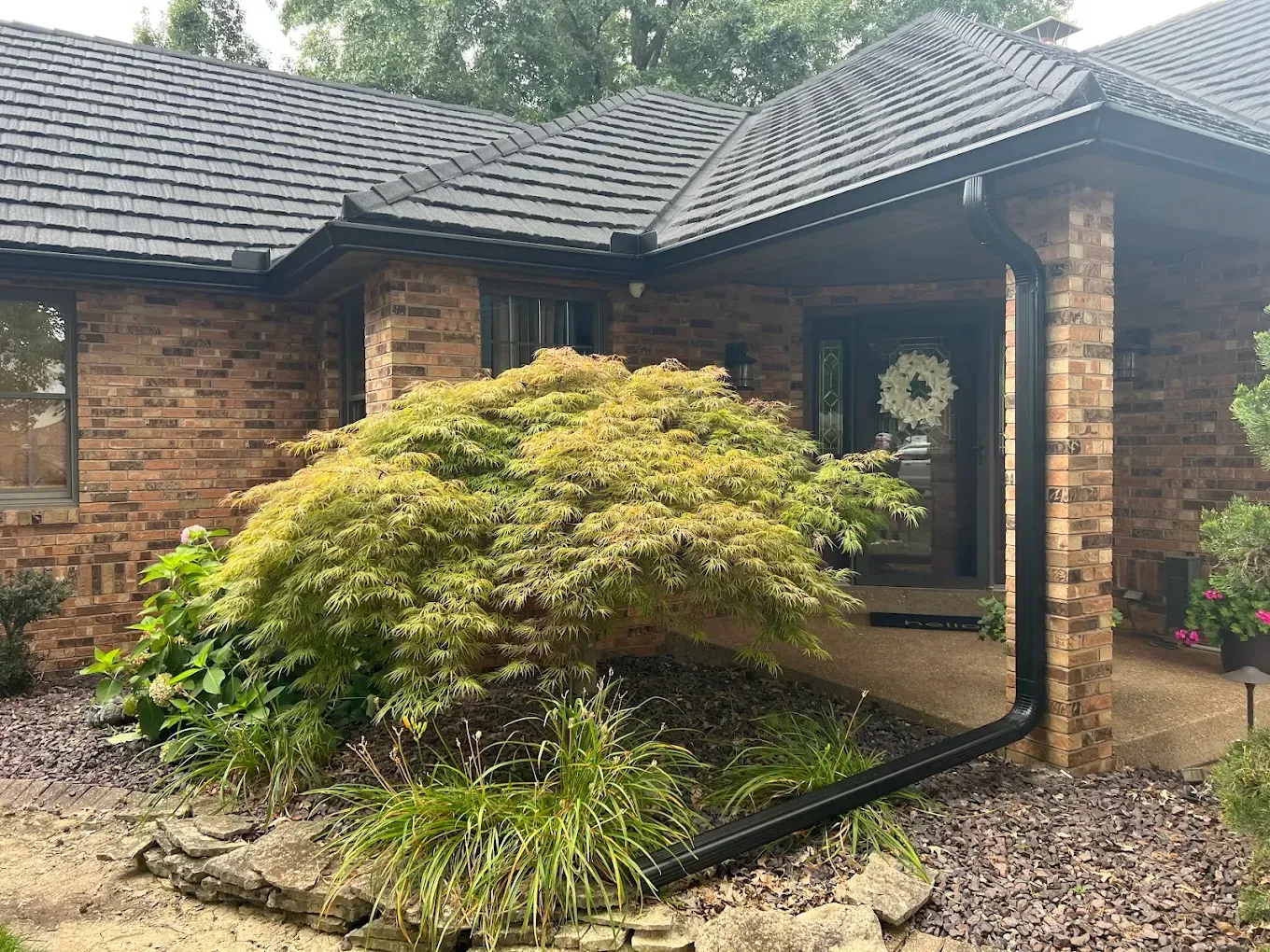
Direct Water Where It Needs to Go
Downspout Installation in Bentonville for properties experiencing pooling water and foundation exposure during storms
K & K Gutters installs downspouts that channel roof runoff away from your foundation, preventing erosion, basement moisture, and damage to landscaping. You're seeing water collect near the base of your home after heavy rain, and without properly placed downspouts, that water has nowhere to go except into the soil directly against your foundation walls. A correctly installed downspout system changes the flow path and moves that water to a safe discharge point.
The process starts with evaluating your roof drainage pattern, foundation grade, and existing gutter layout to determine where downspouts should be placed and how far they need to extend. Each downspout is secured to the fascia and exterior wall using brackets that resist wind and weight from high-volume flow. The outlet is positioned to direct water onto a splash block, into an underground drain line, or across a slope that carries runoff away from the structure.
If you're dealing with standing water near your home or noticing soil erosion along the foundation, contact K & K Gutters to plan a downspout layout that works with your property's natural drainage.
How Downspouts Change Water Movement on Your Property
You'll see water exit the gutter system at controlled points and flow away from the house instead of spilling over the edge or pooling at the base. Installation involves cutting downspout sections to length, connecting elbows at the gutter outlet and again at the wall, and fastening each section with screws or rivets that won't pull loose under load. The materials—typically aluminum or galvanized steel—are chosen for durability and resistance to rust in areas with consistent moisture exposure.
Once the downspouts are in place, heavy rain events no longer result in water running down the siding or collecting in planting beds next to the foundation. K & K Gutters positions each outlet based on grade and obstacles, ensuring that water moves toward the street, a drainage swale, or another low point that keeps it away from vulnerable areas.
The system works with both new gutter installations and existing setups, and additional downspouts can be added if a single outlet isn't handling the volume during peak flow. Extensions and underground tie-ins are available for properties where surface runoff needs to travel farther from the foundation.
Common Questions About Downspout Placement and Performance
Property owners often want to know how many downspouts are necessary and what factors influence their placement and function.
How many downspouts does a typical home need?
Most homes require one downspout for every thirty to forty feet of gutter, though steeper roofs or areas with higher rainfall may need closer spacing to handle volume.
What determines where a downspout should be installed?
Placement depends on gutter layout, foundation proximity, landscaping features, and the natural slope of the yard, with the goal of moving water to a safe discharge area.
When should you add an extension to an existing downspout?
Extensions are necessary when water exits too close to the foundation or when the ground slopes back toward the house, creating a risk of pooling or seepage.
Why do some downspouts use elbows and offsets?
Elbows allow the downspout to navigate around overhangs, porches, or other architectural features while maintaining a clear path for water to exit at the base.
What size downspout is needed for heavy rain in Bentonville?
Standard residential downspouts are two-by-three inches or three-by-four inches, with larger sizes used on homes with steep roofs or long gutter runs that collect significant runoff.
K & K Gutters will assess your roof and yard conditions to recommend the right number, size, and placement of downspouts, so your gutter system handles water efficiently during every storm.